

Reflections

Variations in Cancer Susceptibility Identified through Long-read Sequencing

Katherine Dixon from The University of British Columbia in Canada spoke at the Nanopore Community Meeting 2022 about “Clinical and functional significance of germline variation in cancer susceptibility and disease.” Dixon spoke about the complexity of factors determining cancer. Between 15-20% of cancer show familial clustering, according to Dixon. In Canada, 300,000 are estimated to […]

Read more

Identifying Complex Structural Variation with Nanopore Long-read Sequencing

“Long-read sequencing resolves cryptic structural variation in individuals with syndromic intellectual disability” was the title of the presentation Griet De Clercq from Ghent University in Belgium gave at the Nanopore Community Meeting 2022. De Clercq noted that “40% of people with intellectual disability (ID) remain without genetic diagnosis” and that current diagnostic tests used in […]
Read more

STR Sequencing for Forensic Profiles with STRspy

Courtney Hall from the University of North Texas Health Science Center presented at the Nanopore Community Meeting 2022 on “STRspy-ing hidden variation in forensic DNA profiles using the MinION device.” Hall spoke about how short tendem repeats (STRs) are often used as the “gold standard for human identification in forensic investigations” due to their variability […]
Read more

Sequencing of HCV for Identification of Resistance Mutations

Kame A. Galan-Huerta from the Autonomous University of Nuevo Leon in Mexico presented at the Nanopore Community Meeting 2022 a ten minute session entitled “Identification of resistance mutations to direct-acting antiviral agents against HCV in infected subjects in Mexico.” They spoke about adapting protocols to detect the RNA positive sense hepatitis C virus. Glan-Huerta explained […]
Read more

Metagenomic Binning Considering Modifications

Soren Heidelbach spoke at the Nanopore Community Meeting 2022 about “Developing new bioinformatics methods to identify modifications from nanopore sequencing.” Heidelbach is from Aalborg University, Denmark. They did metagenomic binning: grouped contigs based on information from k-mers and coverage and also considered modification motifs. Their modification of metagenomic binning was to include base modification as […]
Read more

Tilapia, ISKNV, and Tiled PCR

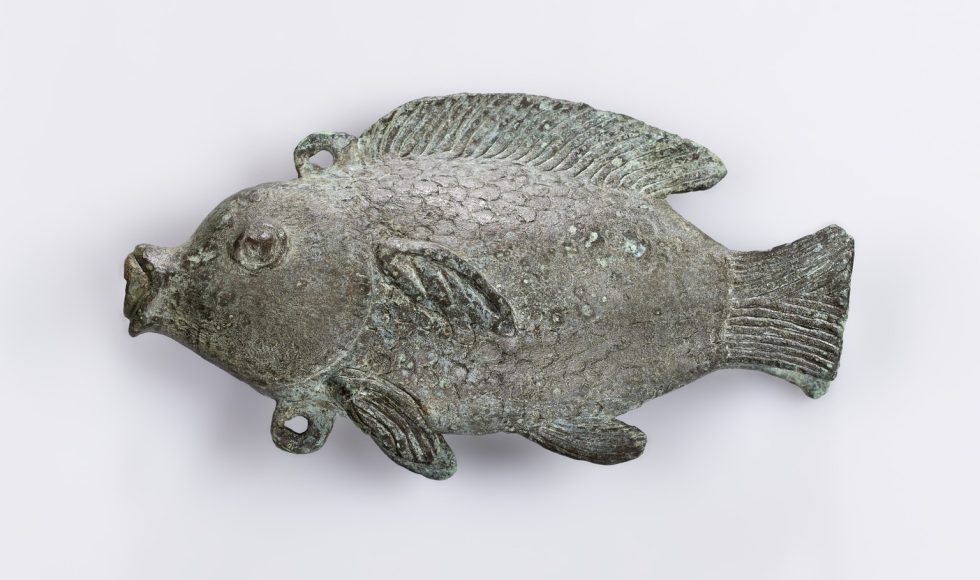
Shayma Alathari from the University of Exeter was the next presenter at the Nanopore Community Meeting 2022 that I watched present. Their five-minute session was very brief, and packed with information. The title of Alathari’s session was “Development and application of genomic tools for tracking viral outbreaks in fish.”Alathari is a Ph.D. student interested in […]
Read more

Nanopore Sequencing to Investigate Splicing Order and Deadenylation Trends

Karine Choquet from Harvard Medical School spoke at the Nanopore Community Meeting 2022 about “Direct RNA sequencing reveals multi-intron splicing order and poly(A) tail lengths across subcellular compartments.” This five-minute session began by explaining RNA processing and removal of introns in eukaryotic gene expression. Choquet explained that “RNA processing is essential for eukaryotic gene expression” […]
Read more

Strand-seq for Haplotyping and Parent-of-origin Assignments

Vahid Akbari is a Ph.D. student at BC Cancer in the Genome Sciences Centre in Canada. They presented at the Nanopore Community Meeting 2022 a session entitled “Simultaneous haplotyping and parent-of-origin assignment of homologous chromosomes without parental sequence data.” The approach they developed allows researchers to haplotype chromosomes and assign parent-of-origin without parent data. They […]
Read more

The Advantages of POD5

I have been thinking and learning about POD5 files. Tonight, I watched a relevant Nanopore Community Meeting 2022 session by Alex Merry, Instrument Software Fellow at Oxford Nanopore Technologies. The session was entitled “Arrow: pointing the way forward for high-performance nanopore signal handling with POD5.” They began talking about FAST5 files to store signal data […]
Read more

Fungal Symbioses and Nanopore Sequencing

Jessica Allen from Eastern Washington University presented at the Nanopore Community Meeting 2022 on “Using nanopore sequencing to investigate genome evolution in fungal symbioses: ploidy, repetitive elements, and reproduction.” Allen studies fungi and mentioned that human fungal pathogens and those affecting plant systems are on the rise. Allen studies lichens. Lichenized fungi are diverse, abundant, […]
Read more