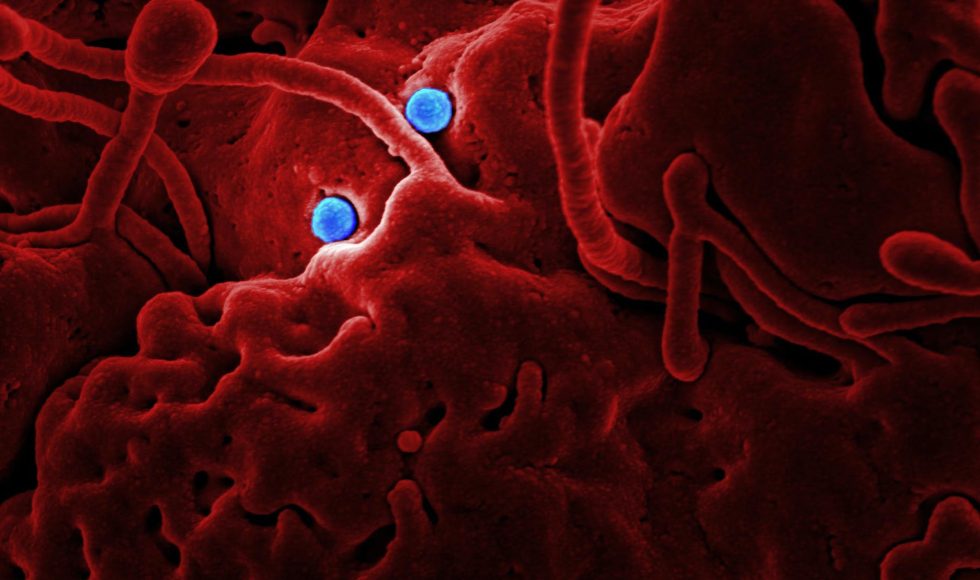

Lewis Stevens from Northwestern University presented at the Nanopore Community Meeting 2019 on “Reference genomes from the field: the genome of Caenorhabditis bovis.” Stevens spoke about nematodes and their importance as parasites! Nematodes are estimated to infect 1.5 billion people worldwide! Wow! C. elegans is, however, distantly related to the nematode parasites. C. bovis may […]

Ryan Wick from the University of Melbourne spoke at the Nanopore Community Meeting 2017. They explained that assemblies still fail. The title of the session is “Assembly is still hard: challenges in genome assembly in the era of long reads.” Wick shared an example of a bacterial genome sequence that leads to inaccuracy in sequencing. […]
Dylan Maghini from Stanford University presented at the Nanopore Community Meeting 2019 on “Genomes from metagenomes: assembling bacterial genomes with nanopore sequencing.” Maghini spoke about the importance of the human gut microbiome on human health. They noted that we still have an incomplete understanding of the gut microbiome. For example, de novo assembly aims to […]
Mantas Sereika from Aalborg University in Germany presented at the Nanopore Community Meeting 2021 a session with a title that caught my attention tonight: “Nanopore R10.4 enables near-perfect bacterial genomes.” They spoke about Nanopore sequencing raw read accuracy improvements and issues with homopolymers. Insertions and deletions in homopolymer regions can be an issue causing frameshifts. […]
This afternoon, I came back from visiting KBase in Berkeley. I am still watching sessions from previous London Callings to learn about different topics I will discuss in the upcoming Portable Genome Sequencing course. Tonight, I found the session by David R. Greig from Public Health England in the UK. Their 2021 London Calling session […]
Today, I spent time with the KBase Ed group at UC Berkeley! The first day was full of tips and opportunities. As I prepare for the Portable Genome Sequencing course later this semester, I am trying to learn about using Oxford Nanopore Technologies (ONT) devices for sequencing plasmids, microbes, metagenomes, and transcriptomes. Tonight, I watched […]
Tonight, I was searching for videos for the course I am preparing to teach on portable genome sequencing technologies. I want to discuss the use of long-read sequencing for identifying and characterizing native plasmids. I found an older yet very relevant London Calling 2019 session. Severine Rangama from the University of Warwick presented a short […]
Colette Felton from the University of California at Santa Cruz presented at the Nanopore Community Meeting in Houston about “Haplotypes, isoforms, and fusions: towards a richer cancer transcriptome.” The Felton read studies splicing, and long reads could be used to detect isoforms. The lab developed a tool called FLAIR2 to study differential splicing. Felton’s lab […]
Rupesh Kesharwani from the Baylor College of Medicine, HGSC & University of North Texas HSC, presented at the Nanopore Community Meeting Houston on “STRspy 2.0: unlocking the potential of long reads for forensic DNA profiles.” They shared that STRs are short tandem 2-7 bp repeats that account for 3% of the human genome. Individuals have […]
“MetaPhaser: methylation-based haplotype phasing of human genomes” is the title of the NCM Houston session I watched tonight. Yilei Fu from Rice University was the presenter. They began sharing how long reads provide more information about structural variations (SV) and help with assembly and phasing. Fu explained an example of thiopurine methyltransferase (TMPT) and how […]